Old Dog Digital

Digital Marketing Consultants in South Florida.

Category: Paid Ads

An advertising model where advertisers pay to show their ads.

  • Domains, URLs, and websites

    Domains, URLs, and websites

    There is no point in having ten different domains pointing to your website. That’s too much and you are just wasting your money. That says a lot about what people know about the internet and how it works.

    One domain is more than enough. What you want to do is to position that domain, so everybody knows where to find you when looking for your company. Having a separate website with its domain for every marketing campaign you perform makes no sense.

    But first things first. Let’s clarify some concepts so you know what I’m talking about. Many people use domain, URL, website, and other terms interchangeably, which leads to confusion and misunderstanding.

    A website is like a house. It’s your home on the internet. It can be as big or as small as you want, it can also be any color you want, you can put whatever you want on it as long as it is legal, or it could even have a store on the first floor, and a secret room for members only.

    Your website can be as simple or as complicated as you want, but you have to remember that not everybody has the same internet speed and not everybody has the same computer or cellphone. So keep it simple, because you want to be accessible for most people.
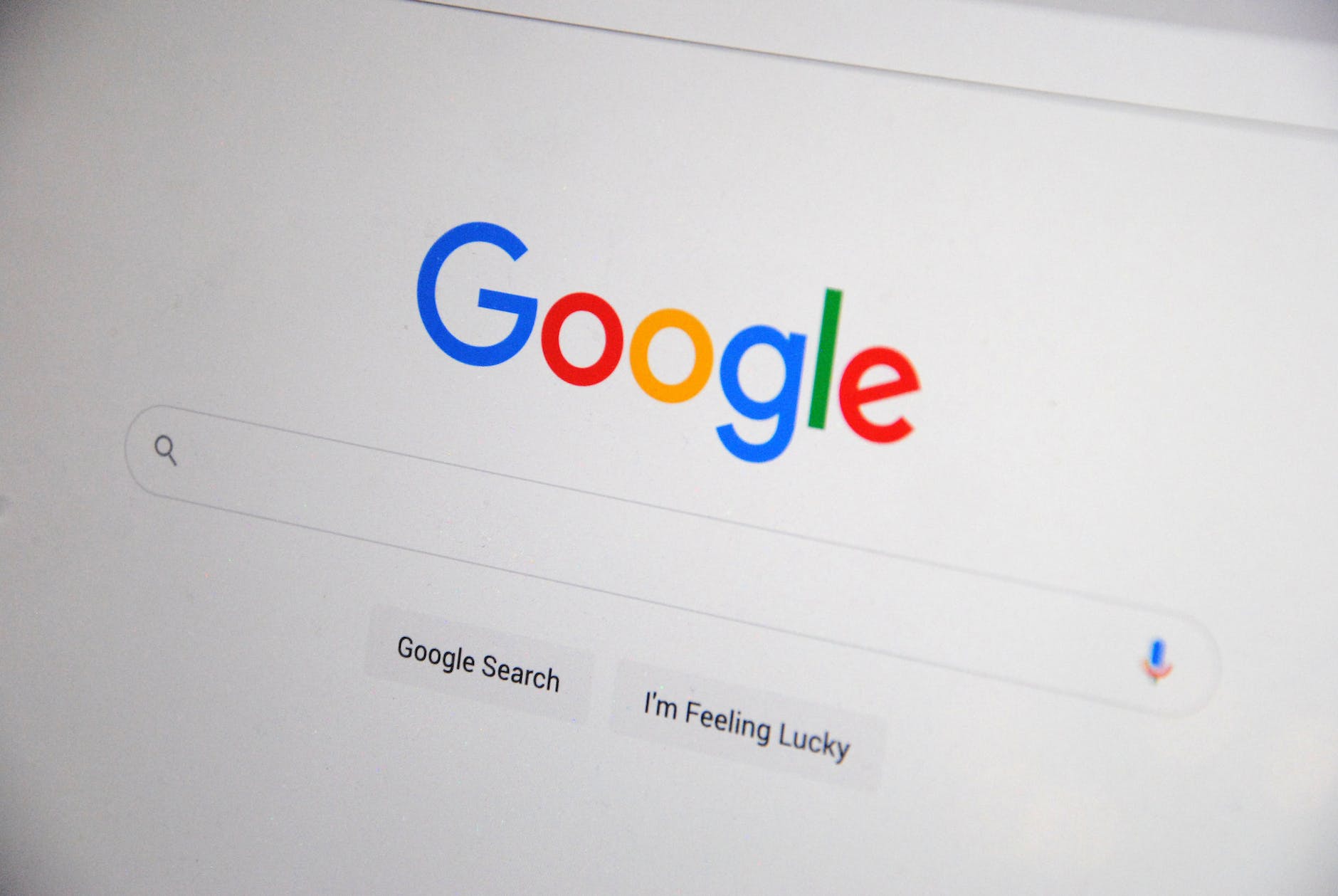
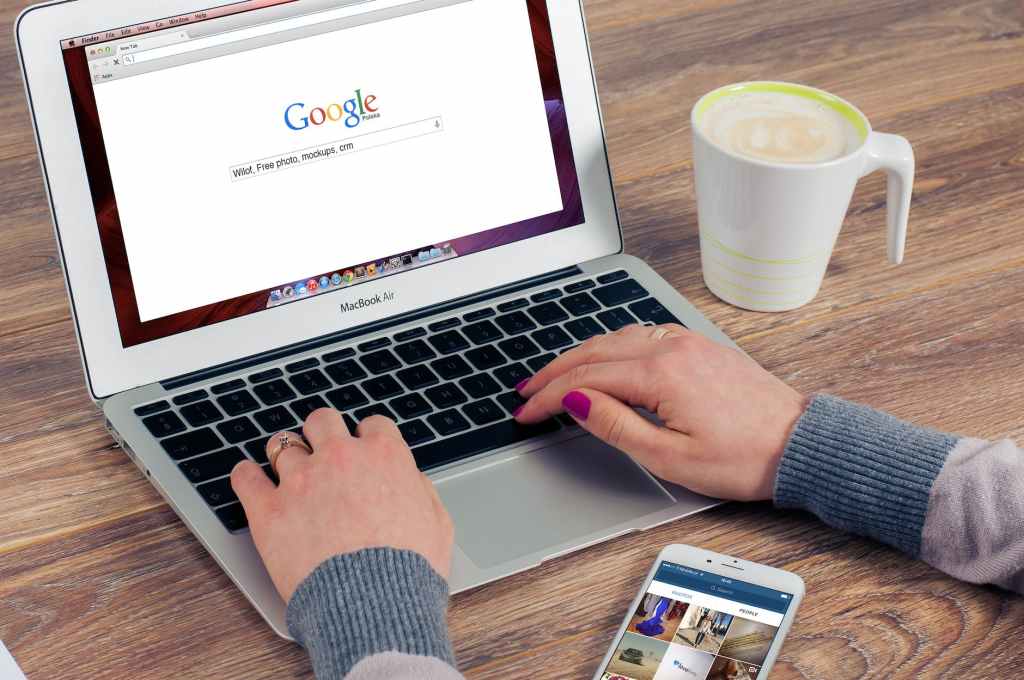
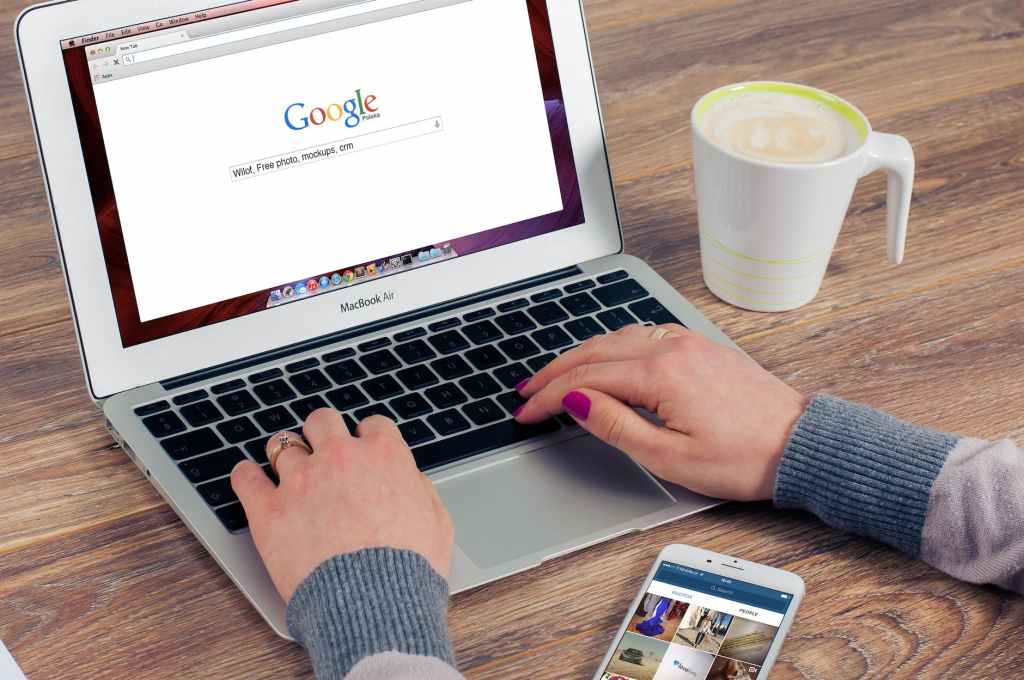
    What you want is to have your website appear on the first page of results when someone searches for something on the Internet related to what you do. Photo by Sarah Blocksidge on Pexels.com

    Your house needs an address, a special kind of address for the internet called an IP address. This kind of address is numerical and is hard to remember, like 192.168.277.68, or something like that.

    To make it easier for everybody, domain names were created. Domains are associated with a specific IP address, so instead of remembering a long set of numbers, you just need to remember something like yourcompany.com.

    It doesn’t have to be a .com, it can be a .net, or a .org, or any of the many options available. It really doesn’t matter as long as it reflects the name of your company and what kind of product or service you offer.

    Some companies won’t let you advertise on their platforms if your domain and the name of your company don’t match, so don’t buy thebestsiteontheplanet.com if that is not your company name. Keep it simple and easy to remember.

    URL stands for Uniform Resource Locator, which is nothing but a string of characters containing a protocol, a domain, and a file name. This tells the web browser where to find a file and how to access it. They look like this: htttp://myothercompany.com/index.html.

    You don’t need to worry about URLs, you can leave that to the computer people, but you need to understand how domains and websites work. So, let’s go back to what we were saying at the beginning of this post: you want your domain to appear on the first page of a Google Search.

    People are more likely to visit the website of the first three to five companies they find. So you want to be one of them, right? You can achieve this by posting a lot of content related to a certain subject AND by advertising your website.

    So don’t waste your money trying to position ten domain names at the same time. Focus on your content and a good digital marketing strategy. You just need one very well-positioned domain name to get great results.


  • One exclamation mark is enough!

    One exclamation mark is enough!

    Grammar and proper punctuation are extremely important not only because they will make any text in your ads readable and thus understandable to your audience. They are also very important because your ad could get banned by whichever platform you are using for poor grammar.

    No, I’m not kidding. Any ad can be banned due to poor spelling, a syntax error, or excessive use of punctuation signs. Most people think they are excellent at grammar, but they’re not. There are a lot of “rules” spreading around that are incorrect.

    Remember, simple is beautiful. There is no need to use complicated wording when you can say the same thing more simply. At least not when writing ads. A simple text will convey a message more effectively than a complex one. So no fancy wording, please.

    The dictionary is your friend. Use it. We have many tools on the internet that can help us do this. Most of them are free. If you’re not sure what a word means, look it up. Better make sure that you’re saying what you think you’re saying.

    Also, learn how to use punctuation marks. Everybody thinks they are an expert and they are not. A lot of people repeat “rules” they heard somewhere for the use of commas and semi-colons, but most of them are wrong. Don’t do that. Look it up. It just takes a few seconds.

    The most common mistakes people make while writing an ad are using too many exclamation marks and over-capitalizing words. There is no need to use three exclamation marks on one sentence, in the same way not every word needs to start with a capital letter.

    The dictionary is your friend. If you’re not sure about something, look it up.
    Photo by Nothing Ahead on Pexels.com

    Think about how people will look on Google for your products or services. What words would they use? That’s how you should write your ad. Simple natural language is way more effective than over-complicated text.

    You’re not writing a novel or a technical essay, you are writing a piece of advertisement and it should be simple because you want it to be read and understood by the most people possible. Keep your messages simple and effective. Don’t try to say everything in one little sentence.

    If you want people to visit your website, talk about that. If you need people to take a look at your new products, say so. Whatever your objective is, keep it simple. Don’t try to do everything all at once. Clear objectives make better ads and better ads give better results.

    That’s it! Use simple wording for your ads, check your grammar, and don’t over-use punctuation signs and capital letters. Google and Facebook will ban your ad if you do that. If you want to find out more about this, read their policies.

  • How much does it cost?

    How much does it cost?

    When a client starts talking to me or any member of my team about advertising on Facebook, Twitter, YouTube, or any other social media, the first question they ask is how much does it cost? That question has a very simple answer and a very complex one. So, I always give both.

    The simple answer is that advertising on any social media costs just a few cents a dollar per view. That means that every time your ad is displayed on anybody’s screen, that platform charges you just a few cents of a dollar, around 30 cents on average.

    You want your ad to be displayed as many times as possible so many people can see it. The more the better, right? So, if you want your ad to be seen by at least 1,000 people, you should invest around 300 dollars, right? Wrong!

    What happens is that, when you are setting up an ad campaign on any social media platform, you start bidding for your ads to be displayed. Just like an auction. So the price is never the same. On average it is 30 cents, but it can be as low as 3 cents or as high as 5o cents, depending on the day of the week, the hour, as well as other factors.

    You don’t have to invest a lot of money to start advertising your company on social media. You can start small and see what happens from there. Photo by Karolina Grabowska on Pexels.com

    You can invest 50 dollars in one week and display your ad on over one thousand screens. It all depends on how you configure your campaign as we discussed before when we were talking about your campaign objectives.

    Advertising on social media is a lot cheaper than advertising on traditional media, but that doesn’t mean it’s cheap. If you want to get great results, you have to invest as much as you can. The more the better.

    You can choose if you want to be charged for every thousand views or by every single time your ad gets displayed. You have a couple more options to choose but remember that before you decide you have to know what your goal is because that changes everything.

    But let’s say that this time you want to do this the easiest way possible and get the best out of a few dollars. In that case, you should set a start date and an end date for your campaign. Then you should set a budget for the whole campaign instead of a daily budget, so you have more control over how your money is spent.

    Another thing you should do in a case like this is to choose the cost-per-click scheme, so you will only be charged when somebody clicks on your ad. That doesn’t mean that person will buy something from you, but it means you will pay only for those who interact with your ad.

    This way you can get better results for just a few dollars. Remember, if your budget is bigger, then you should do things differently, but if you are just experimenting with 50-100 dollars a week, try this and use it as a reference for later more expensive campaigns.

    It should be great to see what happens and you can learn a lot without spending too much money in one experiment. Doing this will give you a better idea of how much it cost to advertise on social media platforms and what kind of results you can get.

  • Take the ladder!

    Take the ladder!

    If you are constantly promoting your products on Instagram and/or Facebook, people might get tired of watching your ads all the time and they might lose their effectiveness. That’s why it is important to have some periods without paid ads and let some organic growth happen.

    Paid ads should be used when you have important information to share with your followers, like the launch of a new product or relevant news of any kind, but you have to be careful not abusing them because people might get used to seeing your ads and start ignoring them.

    If you are beginning and want to let people know that there’s a new face in your business sector, that’s a different story. Awareness is one of the most important steps of every strategy and you should invest as much as possible in this, but just for a few months.

    Once people know who you are and what you do, you can move on to the following stages of your campaign. You can boost some posts if you consider that the information they contain is relevant to your customers; but if you saturate people’s newsfeeds with your ads, they will unfollow you.

    Alternating periods of paid activity with periods of organic activity looks like a ladder on a graph, hence the name of this pattern of growth. Photo by Burak The Weekender on Pexels.com

    One thing that works very well for most brands is to alternate periods of paid reach with periods of organic reach – that means periods with paid ads and periods with no paid ads. That way people don’t get tired of you, and your business keeps growing.

    As long as you have fresh content every week, everything is ok. Because if your only activity on social media is having paid ads campaigns and promoting your products, that means you are having long periods of inactivity and that is not good at all. It’s boring.

    Remember, your content has to be of value to the people that follow you. Not every post should be about you selling your products like we have been discussing in previous posts. Your content should keep going independently of your ads, though they should be coherent.

    That way people will be interested in seeing what’s going on on your social media profiles all the time, and not only when there’s a campaign running. This alternation of paid reach and organic reach is known as a ladder pattern of growth, because of the way it looks on a graph, and this is one of the best ways to grow on social media.

    Even if you had the money to keep your ads running all year, you shouldn’t. That will get old fast. Try intercalating paid and organic reach and wait to see the results. In case you have something really important to share, you can always boost that post to help it get to where it needs to go.

  • Google Ads or AdSense

    Google Ads or AdSense

    What should you use to promote your brand on the internet, Google Ads, or Google AdSense? I know this is confusing for many people, especially those who are just starting with digital marketing, but these two are very different tools. Let’s clear this out.

    Google AdSense is an ads network service designed for publishers. For example, if you own a website, blog, or forum and want to monetize them, this program can help you do exactly that. You have to agree to a lot of policies to use this service.

    What AdSense does is it makes ads appear on your website, and you earn money based on the number of people who see or interact with those ads. The more people that visit your webpage, the more that will see the ads, and the more that you will get paid.

    Have you noticed the group of ads that appear usually on the right column or the bottom of your favorite forum, whichever it may be? That is Google Ad Sense at work, and that means that website is getting paid every time you see or interact with an ad.

    AdSense displays ads on your website and you get paid when people see or interact with those ads. Google Ads charges you for displaying your ad to a predetermined audience defined by you.

    However, Google Ads is a program designed for advertisers. That means that this is the service you should use if you want to promote your products or services. You pay Google to show your ads to people that are searching for something on their platform.

    Google Ads displays your ads on the search results page and their network of publisher websites. This option gives you a lot more freedom regarding the text, the format, and the design of your ad, unlike AdSense. You still have to agree to some policies though.

    You don’t need a lot of money to do this. Opposite to what most people think. anyone can invest a small amount of money and still get results. Of course, the more you invest, the better the results that you will get, but there is no minimum and you have many options depending on what your business goal is.

    Google Ads is a great tool when trying to drive more traffic to your website and/or increase your sales. They can also be great for generating leads, increasing app downloads, getting more people to subscribe to your newsletter, and many more things.

    If you want to learn more about these tools, and a few similar others that Google has, you should visit their website.

  • Let them find you!

    Let them find you!

    Let’s say that you have the greatest business card ever. It has a beautiful design, a perfect font face, an engaging and catchy slogan, and it’s printed on a kind of paper that not only looks great but also feels wonderful to the touch. How will anybody know about this if you don’t share it?

    The same thing happens with your social media profiles and your website. You might have the perfect website and the greatest social media content ever, but you need to let people know that it exists and where to find it for it to work.

    That’s what advertising does for you. It makes it easy for your audience to find your website and your content. It also tells people how to contact you and what products or services they can buy from you.

    In a previous post, we had already said that digital marketing is a lot cheaper than traditional marketing, but it still has a cost. The best thing is that there is no minimum required, so you decide how much you want to spend on it. Obviously, the more you invest, the better the results you will get.

    What makes a digital ad different from a boosted post is that digital campaigns, which are made of ads, can have many different business objectives, while boosting a post can only be used to increase the number of people that sees it and/or to help it get more likes and comments.

    Brands invest a lot of money in advertising, just to let people know what products or services you could buy from them. Photo by Jose Francisco Fernandez Saura on Pexels.com

    Imagine that you’re just starting a new business, and as we said in the first paragraph, you already have a great website and social media content. Now, you need to tell everybody that you exist, what is it that you do, and where they can find you. But how?

    Facebook and Instagram will recommend you boost your posts, and doing that would be great, but that doesn’t help you increase the traffic to your website, where clients would learn more about you, subscribe to your new podcast, schedule an appointment, or whichever the action you want them to do.

    Google can help you with that. A digital campaign on that platform would show your ad to people that would already be looking for somebody that does the same thing that you do, and that is what you want, so Google is one option.

    Another option is to advertise on Facebook and Instagram, or whichever social media platform you choose, instead of just boosting your posts. You could start a campaign and that would do an excellent job, given that you invest a reasonable amount in it.

    Or even better, you could do both things at the same time and start a campaign on Google and social media. That would allow you to try different formats, content and even do some experimentation, to see what works better.

    Remember that there are no magic recipes, and whatever works for one brand might not do the same for another. This would make the last option the best alternative, so don’t be afraid to try new things, start small and increase the investment once you’ve found what works for you.

    Digital ads and boosted posts serve different purposes. Depending on what your objectives are and your budget, you could use one, the other, or both options to get the results you want.

  • Know what you’re doing from the start

    Know what you’re doing from the start

    A digital campaign – just as any kind of campaign – needs a clear objective that has to be established from the start to obtain the desired results. And it may sound pretty obvious, but that doesn’t mean it’s not important.

    It really matters because it changes the way the digital platform of your choice shows your advertisement and it changes the way it handles your budget. If you don’t pay enough attention to it, things can become costly.

    An objective should be a Specific Measurable Attainable Relevant Time-bound goal. It’s not the same to set “increase sales” as your goal as “increase sales by 10% this trimester in comparison to the previous one”. These are called SMART objectives and they can save you a lot of trouble.

    There are a lot of techniques that can be used to set an objective, but I find this one very easy to implement and very useful.

    Once you have a business objective, you have to align it with one campaign objective. Any digital platform that you decide to use will ask you to set one before doing anything else.

    You have to tell the platform what you want it to do before you can set a budget, a location, or even the images, videos, and texts to be used.

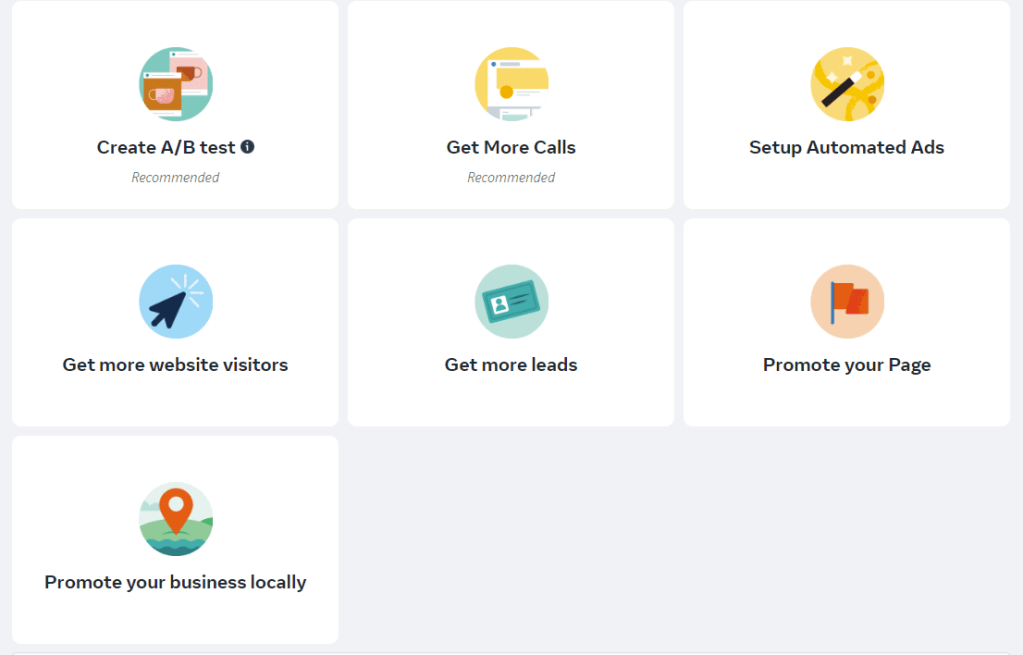
    Facebook, Google, and all the others have a pre-established set of goals from which you can choose the one that best aligns with what you need, so it’s a great idea to learn what each one does.

    Facebook has different campaign goals from which you can choos the one that aligns better with you business objective. Photo by Salvador Puente.

    Although each platform has different options and different names, generally speaking, we can choose between Views, Traffic, Engagement, Leads, Downloads, and Conversions.

    The Views objective shows your ad to the most people possible, while Traffic shows it to people that are most likely to click on a link that will take them to your website (or anywhere that you decide).

    Engagement focuses on getting your post more likes and comments than it normally would. The Leads objective is helpful to get people to send you their information, i.e. their e-mail address to request a quote.

    App Downloads is a pretty self-explanatory option. Conversions optimizes for people who very possibly will perform a certain action that is important to you, i.e. add a product to a shopping cart.

    What you choose will determine the platform, the budget, and even the format of the ads to be used. If you do it this way, it is almost certain that you will achieve the results that you are looking for.