
Old Dog Digital

Digital Marketing Consultants in South Florida.

Category: Digital Marketing

All marketing efforts that take place on the internet.

  • Make a plan, stick to it

    Make a plan, stick to it

    When to post is important, and how often to post is also important, but what to post is the most important thing and is frequently overlooked. There are topics that you should be writing about and others that you shouldn’t.

    You want to be seen as an expert in your area or you want your brand to be perceived as the epitome of quality and great service. Then you have to talk like an expert or say the things that such a brand would say.

    There are some topics that are essential to what you do for a living. If you make cars, for example, you should know everything about engines, seats, and gearboxes. Those are your topics.

    Make a list of those topics or a list of the characteristics your brand should have to be seen as the best in its sector. Depending on what you do, that list is going to include very different things.

    Brands are more concerned with the quantity of posts they make in a week than the quality of their content. Being relevant should be their main focus. Photo by Markus Spiske on Pexels.com

    You’re going to post about your topics two or three times a week – or as frequently as it is recommended for the platform that you are using -, but you are doing it according to a plan.

    Make a calendar of when to post about which topic on which platform, with pictures and everything. That’s your plan and you should have enough content for a week or two.

    That’s why brands shouldn’t just jump on the next trend. You have to think about what that post will say about you as a brand. If it is something that works for you, go ahead, but it’s something you shouldn’t do most of the time.

    Having a content plan also improves your SEO rankings. Remember search engines crawl websites looking for certain factors that define the order in which they will appear on the search results page.

    If you frequently post about certain subjects and somebody performs a search about them, the search engines already know that your website has the answers to such questions and they will include you in their results.

    As conclusion, having a content plan is essential when positioning yourself or your brand as an expert. It also helps you create content more easily and it increases your SEO rankings. You just have to stick to it.


  • Watch your tone

    Watch your tone

    Sometimes we focus on the wrong things. We tend to look for the latest trends in social media, the best formats to use, the best time to post, and the latest graphic design tools, but we forget about what’s important.

    Let’s not forget that social media’s main purpose is to generate a guided conversation between our potential clients and us as a brand. It has to be guided because we want it to be about us, about what we do.

    As we said in a previous post, this dialog lets us promote not only our services and products but the values and principles we want to associate with our brand. But we have to make it happen.

    How do we do that? By defining the language, the tone, and the style that we plan to use in that conversation. We have to make a series of objective choices that will define all that. This is communication 101.

    Do we want to be perceived as approachable or unreachable? Serious or funny? Professional or casual? We have to take into consideration all the characteristics that define us as a brand.

    Why should people follow you and not your competition? What makes you different? You don’t want to be perceived as boring or as someone that doesn’t listen You want people to follow you, to talk to you, because you want to convince them.

    Formal or informal? The style of communication that you choose will affect the way people see you as a brand. Photo by Liza Summer on Pexels.com

    The easiest way to do this is to create a character. Don’t worry, this character won’t show up on your social media or anything like that. It’s just a tool that will help create content with a uniform tone, style, and language.

    This imaginary person, with their personality, will be who you’ll become while creating content. That way, it doesn’t matter who writes it, it will always have the same traits.

    If your target audience is lawyers, you have to speak like a lawyer. If you are talking about cars, learn all the terminology and expressions that car fanatics use. You don’t have to be a petrolhead to talk like one, but if you sound fake, you will lose your audience.

    Whatever you choose will affect everything you do later, like the kind of things that you will post about, the kind of images that you will use, and even the colors that you pick.

    So make a plan that considers every situation. Prepare a document with all of these choices, some frequently asked questions, and their respective answers – You don’t want to sound robotic, so have some variations ready.

    When you start posting, stick to your plan. Always keep the conversation on the positive side and never insult anybody. If you get negative comments, listen to them and try to help, but never delete them. Trolls are an exception, never waste your time on them.

    As you can see, you can easily forget about the basic, but most important, aspects of communication. Defining this will save you a lot of future headaches. Like they say: “it takes one thousand posts to build a brand, but only one to destroy it”.

  • There is no magic recipe

    There is no magic recipe

    A few weeks ago, I was talking to somebody who wanted me to give him the solution to all his problems with Social Media, just by looking at the ads manager data that he had on his computer screen. “What do you see then?”, he insisted.

    I explained to him that I had to take a closer look at the numbers and the content that he was posting, so I could tell him something significant that could help him generate more leads, which he had already explained that it was what he wanted.

    He looked at me and said that he didn’t want me to do that, he just needed me to give him a general formula that could help him. He wanted the magic recipe that would take him to the next level on Social Media.

    Of course, my answer was that there is no magic recipe and no secret formula. Every brand is different and every account needs different things. Some things might work wonders for one brand, but be the worst to ever happen for another.

    Analytics and statistics should be your main source of information when defining your social media strategy. Don’t be afraid to experiment but always measure everything. Photo by Lukas on Pexels.com

    Social Media and Digital Marketing have been around for some years now, but the science behind them is still developing. Just take into consideration all the changes that all social media platforms are still making to their policies and the new functions and formats they are adding.

    Whichever analytics tool you decide to use, should be your main source of information. All the adjustments that you make to your digital marketing strategy must be based on statistics. This doesn’t mean that you can’t experiment, of course you can, but always measure everything.

    There are no rules, so feel free to try new things. There are however some best practices and you should follow them. There’s a reason why they exist. They are general things, but very important and you can read about them here.

    For example, posts don’t need to be that long. A few characters and a great image are better. Video content is king, but try different formats, because you don’t want to bore your followers. Don’t post too frequently also. Think about what you would like to see as a follower and start from there.

    The only thing you can be sure of is something we have discussed already: listen to your audience. They will tell you what to post, when to post, how often, and everything you need to know.

  • Facebook profile vs Business Page

    Facebook profile vs Business Page

    Frequently, I hear people complain about bad experiences that they had with Facebook. Some of them are friends and people I know, who tried to use it and didn’t work out, that come to me looking for advice.

    One of the things I’ve noticed is that most of them were using their personal Facebook profile and not a Facebook Business Page. When I point that out to them, the answer is always very similar: A what? Isn’t it the same? What’s the difference?

    A Facebook Business Page is a kind of profile with all the tools you need to promote your business. Some of these tools help you create content more easily, others let you schedule your posts or manage your ads. There are a few things that pages can do and profiles can’t.

    I’m not going to list these tools, because you can find all the information and very detailed guides about them on Facebook, in case you wanted to learn more about them.

    What I can tell you is that these people, the ones that we were talking about in the first paragraph, have noticed a huge change once they made the switch to a business page.

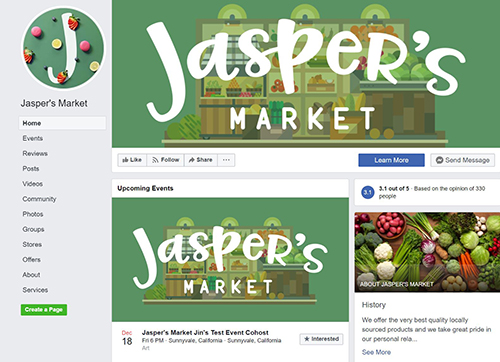
    A Facebook Business Page for a fictional brand.
    Facebook Business Pages have many tools that a personal profile doesn’t have. These tools help you create content, manage ads and keep track of what’s going on with your page. Photo by Facebook.

    In some cases, they have even decided that they didn’t need a website and that they were going to use their page as one. Yes, you can do that, but that doesn’t mean it’s the right choice for everyone. It depends on the kind of business you are running and your commercial objectives.

    One of the things I like the most about these pages is that they let you track every comment and interaction easily, which is one of the things you would be spending too much time on if you used a personal profile.

    Another thing I like is that you can create a team and assign a role for each member. This way, you can focus on your tasks while everybody else does their job. Personal profiles can’t do this. There’s no way.

    With a business page, you have control over literally every aspect of your content. You can plan your posts with all the anticipation that you need and you can schedule them, which makes managing a page a job a little less life-absorbing.

    The most important thing is that when you create a business page, you automatically create an Ads Manager account. This allows you to create campaigns to advertise and promote your brand.

    But even if you’re not using this feature for whatever reason, having a business page is preferable because they were designed with all the characteristics needed to promote your products or services on Facebook.

  • Know what you’re doing from the start

    Know what you’re doing from the start

    A digital campaign – just as any kind of campaign – needs a clear objective that has to be established from the start to obtain the desired results. And it may sound pretty obvious, but that doesn’t mean it’s not important.

    It really matters because it changes the way the digital platform of your choice shows your advertisement and it changes the way it handles your budget. If you don’t pay enough attention to it, things can become costly.

    An objective should be a Specific Measurable Attainable Relevant Time-bound goal. It’s not the same to set “increase sales” as your goal as “increase sales by 10% this trimester in comparison to the previous one”. These are called SMART objectives and they can save you a lot of trouble.

    There are a lot of techniques that can be used to set an objective, but I find this one very easy to implement and very useful.

    Once you have a business objective, you have to align it with one campaign objective. Any digital platform that you decide to use will ask you to set one before doing anything else.

    You have to tell the platform what you want it to do before you can set a budget, a location, or even the images, videos, and texts to be used.

    Facebook, Google, and all the others have a pre-established set of goals from which you can choose the one that best aligns with what you need, so it’s a great idea to learn what each one does.

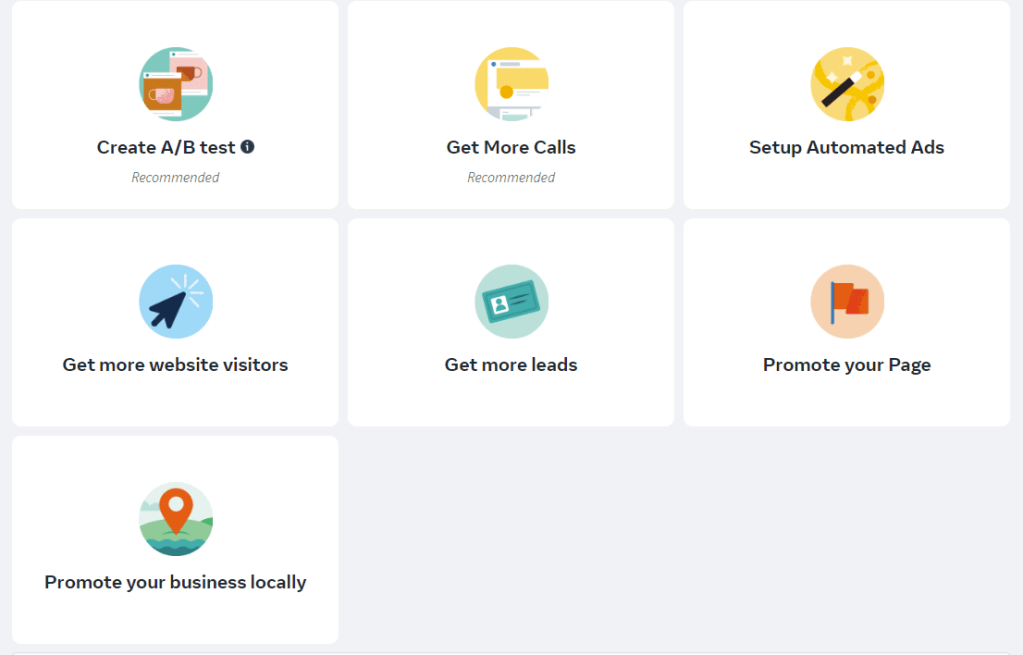
    Facebook has different campaign goals from which you can choos the one that aligns better with you business objective. Photo by Salvador Puente.

    Although each platform has different options and different names, generally speaking, we can choose between Views, Traffic, Engagement, Leads, Downloads, and Conversions.

    The Views objective shows your ad to the most people possible, while Traffic shows it to people that are most likely to click on a link that will take them to your website (or anywhere that you decide).

    Engagement focuses on getting your post more likes and comments than it normally would. The Leads objective is helpful to get people to send you their information, i.e. their e-mail address to request a quote.

    App Downloads is a pretty self-explanatory option. Conversions optimizes for people who very possibly will perform a certain action that is important to you, i.e. add a product to a shopping cart.

    What you choose will determine the platform, the budget, and even the format of the ads to be used. If you do it this way, it is almost certain that you will achieve the results that you are looking for.

  • You need the whole package

    You need the whole package

    More than a few people have told me in different occasions that they want to start using “the internet” for their businesses, but that they don’t know what they need.

    Facebook, SEO, e-mail campaigns, websites, etc, it’s all the same for them. They don’t know the difference between one or the other and they don’t need to. They just know they need to do something about it and they should.

    That’s Digital Marketing and you need all of it if you want it to work properly and give you the results that you are looking for. You need a website that’s been SEO optimized, you need social media profiles with quality content, and you need an ads campaign. You need a complete strategy.

    It’s like an engine: you need all the parts of the machinery working at the same time for it to actually, well, work. So let’s take a quick look at each part of this complex thing called Digital Marketing.

    Engine showing all of its parts.
    You need all the parts of the engine running properly for it to work like it’s supposed to work. With Digital Marketing it’s the same. Photo by Tim Mossholder on Pexels.com

    Your website is your presence on the internet, It’s your home, and it contains all your contact information and a description of your services or products as a minimum. But you need to let everybody know that you have a website and it needs to be easily found, so it needs to be search engine optimized (Google is the most important search engine, but it’s not the only one).

    Facebook, Twitter, TikTok, and all the other Social Media platforms are a tool for building a deep connection with those interested in what you do or what you sell. Social Media, liked we discussed in a previous post, is where you build a community, a good reputation, and eventually a group of potential clients. You don’t need to have a profile in all of them, just the ones the people that might be interested in your products use.

    Ads let your message reach a wider audience, those who don’t follow you in social media and don’t know about your brand. They can also be useful for letting your existing audience know about your new products or services, or if you have a special offer for them.

    E-mail marketing is another important tool because it not only lets you send a message to your audience, it also lets you manage the relationship with them in a more personal way. Messaging services, like Whatsapp, are also excellent at doing this.

    This is not everything there is to know, that was never the intention of this post. We just want to let you know that you need all of it, the whole package: the website, the posts, the ads, the SEO. You will also need a clear objective. But that subject deserves its own post.

  • Stop selling, start listening.

    Stop selling, start listening.

    In theory, you advertise to increase your sales, but you are advertising and your numbers stay the same. Why is this happening? Well, because you’re selling. Let me explain.

    Marketing and Sales are two different things and you should know how to do both if you want them to work for your business. I will not tell you how to sell, you know how to do that. But let me tell you something about Marketing: it has changed a lot.

    Marketing, especially Digital Marketing, can help you with sales, but only if you use it the way it is meant to be used and not as just another outlet for your products.

    First you need people to know that your brand exists and the quality of your products or services, before they even consider buying something from you. So the first thing you should do is talk about your brand.

    And with this, I don’t mean that you let your audience know the name of your company and what kind of products or services you sell. You also need to build a good reputation. You might even want people to think you’re cool, fashionable, or even a great investment.

    Social Media is the perfect tool to do that. Facebook, Instagram, WhatsApp, TikTok, and all of them let you promote your brand, and the values and principles you want to be associated with. They also let people tell you what they think and what they want. That’s their main purpose. Not selling. That’s the catch.

    Cellphone screen showing several Social Media icons.
    What separates Social Media from other media is that users can interact with your content, which is a great source of feedback. Posting on them also helps with your SEO. Photo by Pixabay on Pexels.com

    Of course you can sell on Social Media, these services have all the tools you need to sell online, even if your website doesn’t have a store. But they weren’t created for that. They were created to establish a deep connection with the ones that follow you, with your audience.

    Once they know you and everything that you represent as a brand, once you’ve talked with them, then you can start asking them if they want to know more about your products, or if they want to subscribe to your e-mail list and stay updated about new launches or offers.

    If you start bombarding your audience with messages selling them stuff, people will do with your posts the same thing that they do with ads on television: they will switch the channel, they will stop following you.

    Take the time to build a community, get to know your audience, learn what they like and what they don’t. Listen to the feedback that Social Media is giving you for free. Then you can think about increasing your sales. That’s the way it should be done.